
Understanding Term Life Insurance: Protecting Your Loved Ones
- Philippe Deray

- Nov 4
- 3 min read
Updated: Nov 5
Term life insurance is one of the most straightforward and affordable ways to provide financial protection for your loved ones. Unlike permanent life insurance, which offers coverage for your entire life and can include a cash value component, term life insurance provides coverage for a specific period, known as the “term.” This could range from 10, 15, 20, or even 30 years, depending on your needs and the options offered by your insurance provider.
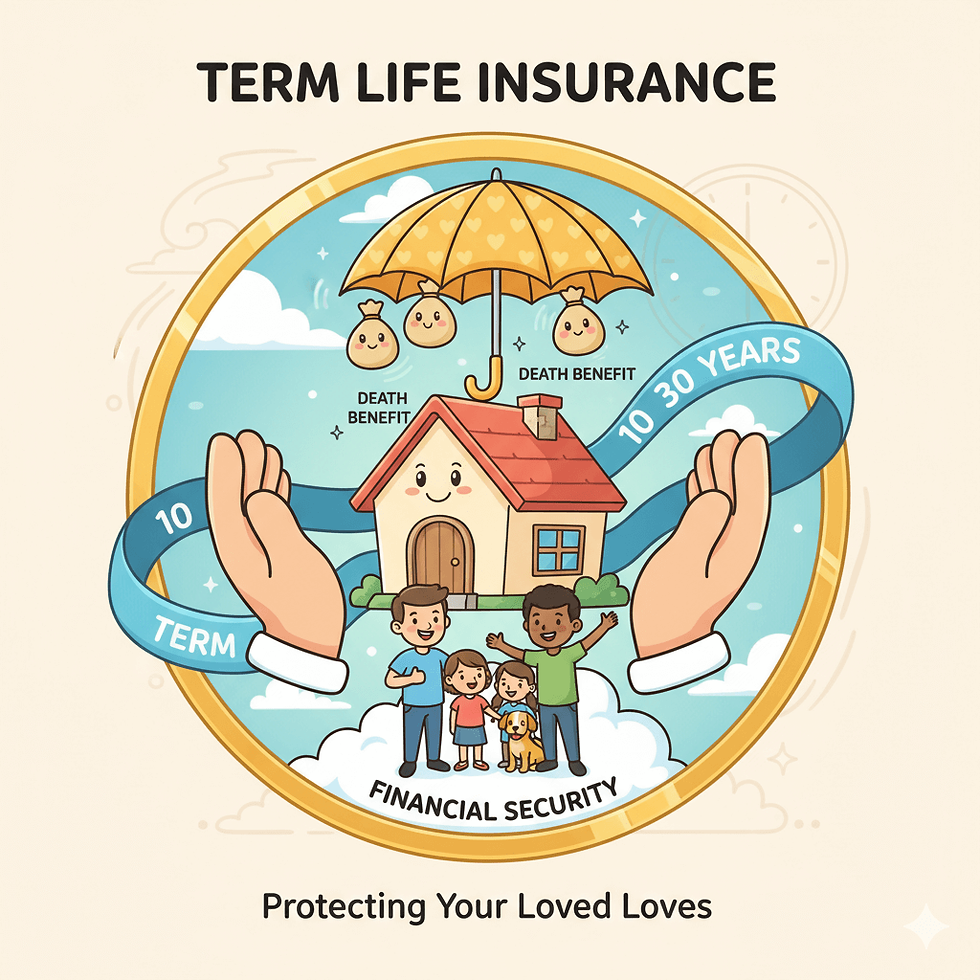
The primary purpose of term life insurance is to provide a financial safety net in case the insured person passes away during the policy term. If the insured dies while the policy is active, the beneficiaries receive a death benefit. This money can be used to cover outstanding debts, mortgage payments, education expenses, or daily living costs. Because the policy only pays out if the insured dies within the term, term life insurance tends to be much more affordable than permanent life insurance.
How Term Life Insurance Works
When purchasing term life insurance, you choose the length of the term and the death benefit amount. The death benefit is the amount your beneficiaries will receive if you pass away during the term. Premiums are typically fixed for the duration of the term, meaning you pay the same amount each month or year. Some policies also offer level premiums that remain constant over the life of the policy, while others may increase over time.
At the end of the term, the policy generally expires. There is no payout if the insured is still alive unless the policy includes a renewal or conversion option. Many term policies allow you to convert your term insurance to a permanent life insurance policy, which can be a valuable option if your coverage needs change or you develop health concerns that could make purchasing a new policy more expensive.
Benefits of Term Life Insurance
Affordability: Term life insurance usually has lower premiums compared to permanent insurance because it does not include a cash value component. This allows individuals to purchase higher coverage amounts for the same monthly cost.
Flexibility: Term lengths vary, allowing you to choose coverage that aligns with your financial goals, such as covering a mortgage or providing for your children until they become financially independent.
Financial Security: Term life insurance ensures that your loved ones are financially protected in the event of your passing, helping them maintain their lifestyle and meet essential financial obligations.
Simplicity: Term life insurance is straightforward and easy to understand, making it a good choice for individuals seeking clear and direct coverage without complex investment features.
Considerations Before Purchasing Term Life Insurance
While term life insurance provides important protection, it’s essential to evaluate your personal circumstances before purchasing a policy. Consider factors such as your financial obligations, the length of coverage you need, and your overall budget. Term life insurance may not be suitable for individuals seeking lifelong coverage or an investment component, since it does not accumulate cash value.
Additionally, it’s important to work with a licensed insurance professional to ensure you select a policy that meets your specific needs and complies with all state regulations. Insurance laws vary by state, and an agent can help guide you through the underwriting process and explain policy features clearly.
Conclusion
Term life insurance is an effective and cost-efficient way to protect your family’s financial future. By choosing an appropriate term and coverage amount, you can provide peace of mind knowing that your loved ones will have financial support if the unexpected occurs. Whether you are just starting a family, paying off a mortgage, or planning for future expenses, term life insurance can play a critical role in your overall financial plan. Always consult a licensed insurance professional to explore your options and ensure the policy aligns with your needs and long-term goals.
Life Insurance Disclaimer
Disclaimer: This article is for informational purposes only and is not legal, financial, or insurance advice. Life insurance needs and products vary by individual, state, and insurer. Policies may involve fees, costs, and limitations. Some policies include a cash value component that can grow over time, and certain strategies may allow for accumulation beyond basic protection. Results are not guaranteed and may vary by policy, insurer, and state. Consult a licensed insurance professional before making any life insurance decisions.
#TermLifeInsurance #LifeInsurance #FinancialProtection #FamilySecurity #InsuranceCoverage #AffordableInsurance #InsuranceTips #PeaceOfMind #ProtectYourLovedOnes #InsurancePlanning


Comments